They Didn't Call It Feminism Either
Most of the women who built the freedoms African women have today never used the word. That doesn't make what they did any less feminist.
A friend read A Conversation With My Father and said something that stuck with me: "Some of those women didn't fight for women's rights directly, but the work they did while being women in the times they were in somehow made way for feminism to move forward."
That is one of the most honest descriptions of this entire archive.
The word nobody used
Yaa Asantewaa did not call herself a feminist. She was a queen mother of the Ashanti who, in 1900, stood before a room full of men who were ready to surrender to the British and asked them where their courage had gone. When they would not fight, she led the war herself. Her concern was sovereignty, not gender theory. But a woman standing in front of an army, commanding men to follow her into battle against a colonial power, is as radical an act as any feminist text has ever described.
Funmilayo Ransome-Kuti organised tens of thousands of market women in Abeokuta to resist unjust taxation in the 1940s. She forced a king to abdicate. She fought for women's right to vote. She did all of this without ever needing the word "feminism" to justify what she was doing. The injustice was obvious. The response was action.
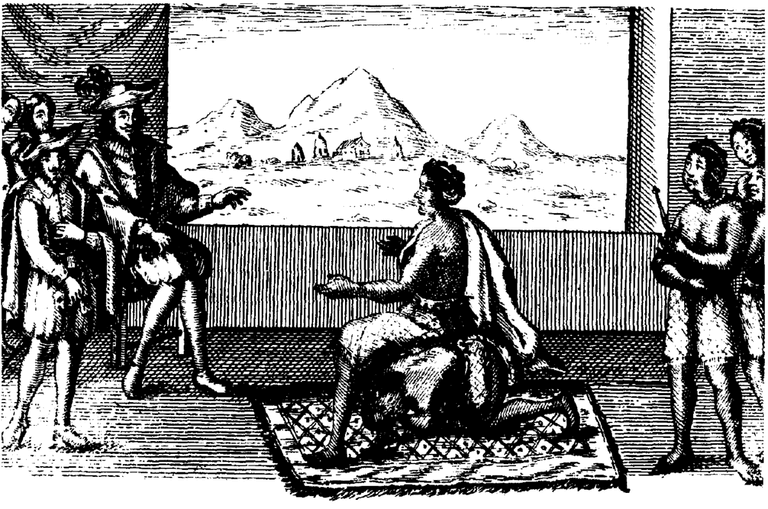
Nana Asmau, born in 1793 in what is now northern Nigeria, created a network of women educators across the Sokoto Caliphate at a time when most of the world considered women's education irrelevant. She wrote poetry in four languages. She trained women to teach other women. She did this within an Islamic framework, not against it. Nobody called her a feminist then. But the system she built was one of the earliest organised efforts to educate women on the African continent.
None of these women sat down and said, "I am doing feminism now." They saw a problem. They had the power or the courage to act. And they acted.
The label came later
The word "feminism" in its modern sense emerged from 19th-century European movements. It was shaped by the specific experiences of white European and American women fighting for suffrage and property rights. When it arrived in African contexts, it carried that baggage. It felt imported. Foreign. Not quite right.
And for many Africans, especially men but also many women, it still feels that way. The word triggers a set of assumptions: anti-men, anti-family, anti-tradition, anti-African. People hear it and shut down. The conversation dies before it begins.
But here is the thing. The work that feminism describes was happening in Africa long before the word existed. Women were leading, organising, resisting, building, and teaching across the continent for centuries. They did not need a European word to validate what they were doing.
When Amina of Zazzau expanded her kingdom through military conquest in the 16th century, she was not waiting for a label. When Kimpa Vita led a religious and political movement in the Kingdom of Kongo in the early 1700s, she was not referencing a framework. These were women exercising power, and the world around them tried to stop them for the same reasons women are still stopped today.
The friend who got it right
My friend's reply to the article about my father ended with something I keep thinking about. She said the stories of the great women before us matter. But so does the revolution happening now. And that the revolution will make people uncomfortable because the status quo is finally being questioned.
She is right. Every woman in this archive made someone uncomfortable.
Huda Shaarawi removed her veil publicly in Cairo in 1923 and started a movement that transformed Egyptian society. Uncomfortable. Winnie Madikizela-Mandela kept the anti-apartheid struggle alive for 27 years while her husband was in prison, and the state tried to destroy her for it. Uncomfortable. Nawal El Saadawi wrote about female sexuality and patriarchy in Egypt and was imprisoned, exiled, and put on a death list. Deeply uncomfortable.
The discomfort is the point. It always has been.
Why the word matters less than the work
My father said, "Those women didn't fight for feminism. They fought for their rights." My friend said some of those women made way for feminism to move forward just by doing what they did while being women.
Both are true. The women in this archive fought for rights, for justice, for education, for survival, for power, for their children, for their communities. Some of them would have rejected the word "feminism." Some might have embraced it. Most were too busy doing the work to worry about what anyone called it.
The point of this website has never been to label people. It is to document what they did. And what they did, taken together, is a record of African women pushing against limits that were designed to hold them back. Call that feminism. Call it women's rights. Call it justice. Call it history. The name does not change what happened.
Dora Akunyili did not fight as a feminist. She fought as a pharmacist, as a regulator, as a mother who watched her sister die from counterfeit medication. But the result of her work was that Nigerian women (and men, and children) could trust the medicine they were taking. That is a feminist outcome whether anyone intended it to be or not.
What this means going forward
The conversation between my father, my friend, and me is the same conversation happening across Africa right now. Older generations see the word "feminism" and hear an attack on their values. Younger generations see it and hear a call to action. And somewhere in between, the actual history gets lost.
This website exists in that gap. It does not ask you to call yourself anything. It asks you to read the stories and decide for yourself what they mean.
Because the women who came before us did not wait for permission. They did not wait for the right word. They did not wait for the world to be ready.
They just started.