How Colonialism Rewrote the Rules for African Women
A look at how European colonisation disrupted the power, autonomy, and rights that African women held in their own societies, and how the effects still linger today.
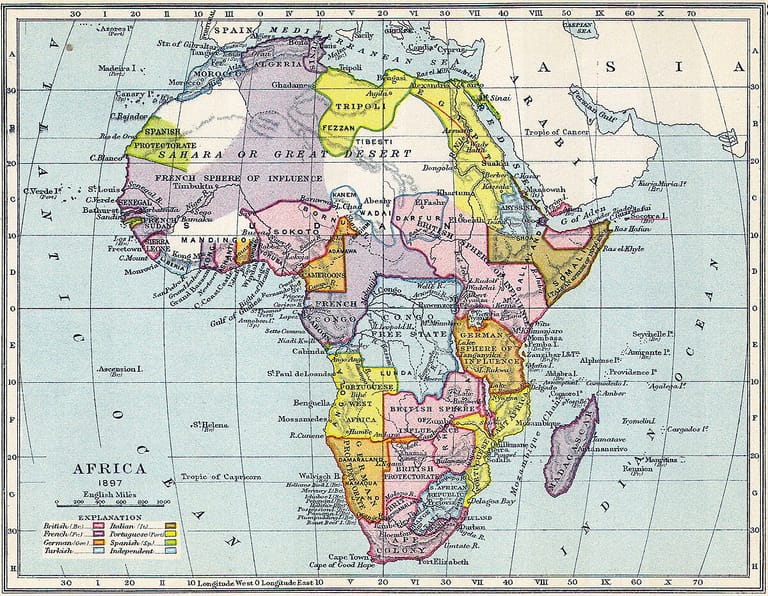
One of the most persistent myths in conversations about gender in Africa is that women have always been subordinate. That the man leads, the woman follows, and that is just "African culture." But history tells a different story. In many African societies before European colonisation, women held land, controlled markets, led communities, served as spiritual authorities, and even ruled kingdoms. Colonialism changed that. Deliberately and systematically.
Understanding how it happened is essential to understanding gender inequality in Africa today.
What women's power looked like before colonisation
Before European powers carved up the continent, many African societies had structures that gave women real authority.
Among the Igbo of southeastern Nigeria, women had their own political assemblies and could impose sanctions on men who overstepped their boundaries. The dual-sex political system meant that women governed women's affairs through their own leaders, and men governed men's affairs. Neither was automatically above the other.
In the Ashanti kingdom in present-day Ghana, lineage was matrilineal, traced through the mother. The Queen Mother was not a figurehead. She had the power to nominate the king and to remove him if he failed his people. Yaa Asantewaa was a Queen Mother who led a military uprising against the British. That kind of authority was not unusual in her culture. It was the system.
The Lovedu people of southern Africa were ruled by Rain Queens for centuries. In parts of East Africa, women were central to agricultural economies and held decision-making power over food production and land use.
Nzinga of Ndongo and Matamba ruled two kingdoms in present-day Angola and fought Portuguese colonisers for over 30 years. She was not an exception to her society. She operated within a political culture that accepted women in power.
This is not to say that precolonial Africa was a gender utopia. Inequality existed. But the rigid, blanket subordination of women that many people today call "tradition" was not the default across the continent. In many places, it was introduced.
What colonialism did
European colonial governments arrived with their own ideas about gender, shaped by Victorian-era values that placed men firmly above women in public life, law, and property.
Land was given to men. Colonial administrators allocated land titles and property rights almost exclusively to men, even in societies where women had historically owned or controlled land. This single change stripped women of economic power that had taken generations to build.
Political authority was handed to men. The British system of indirect rule, for example, appointed male chiefs as the primary leaders, even in places where women had held parallel or complementary authority. In Igbo society, the women's political system was essentially ignored by the British because it did not fit their understanding of governance. That erasure was not accidental. It was a choice.
Education was offered to boys first. Missionary and colonial schools overwhelmingly enrolled boys, especially in the early decades. Girls were often taught domestic skills rather than academic subjects, reinforcing the idea that their role was in the home. This educational gap created a cycle: men were educated, so men got the jobs, so men held the power, so the next generation assumed that was the natural order.
Laws treated women as dependents. Colonial legal systems frequently classified married women as legal dependents of their husbands. Women could not sign contracts, own property independently, or represent themselves in court in many colonial territories. These were laws imported from Europe and imposed on societies that had operated differently.
Religious institutions reinforced new norms. Christian missionaries, who played a major role in colonial Africa, promoted a model of family life where the husband was the head and the wife was submissive. This was taught as moral truth, not cultural preference. Over time, many African communities absorbed these teachings so deeply that they became indistinguishable from what people considered their own tradition.
The lasting confusion
Here is where things get complicated, and where a lot of modern arguments about gender in Africa go wrong.
Many of the gender norms that are now defended as "African tradition" were actually created, deepened, or formalised by colonialism. When someone says "In our culture, women do not lead" or "In our tradition, property goes to men," they may be genuinely unaware that those rules were shaped by European influence rather than by their own ancestors.
This does not mean all gender inequality in Africa is colonial in origin. That would be too simple. But it does mean that anyone who wants to talk seriously about gender in Africa needs to understand what came before colonisation and what changed during it. Without that context, the conversation is incomplete.
Funmilayo Ransome-Kuti spent her life fighting systems that colonialism had built and that Nigerian society had absorbed. Gambo Sawaba fought against practices in northern Nigeria that had become entrenched under indirect rule. Charlotte Maxeke challenged the racial and gender hierarchies that colonial South Africa had established. These women were not fighting African culture. They were fighting colonial distortions of African culture.
Why this matters for young people
If you are a young African growing up today, the world you live in was shaped by colonialism in ways that are often invisible. The gender expectations you encounter at home, at school, in your community, and in your religious institutions carry the fingerprints of a system that was designed to benefit European interests, not African ones.
Knowing this does not mean rejecting everything you were taught. It means thinking critically about where your beliefs come from. It means asking whether the rules you live by are truly your own or whether they were written by someone else and handed down without question.
The women on this platform challenged systems that claimed to be permanent. They knew that what people call "the way things are" is often just "the way things were made." And things that were made can be remade.
What to take away
- Many African societies gave women significant political, economic, and spiritual power before colonisation.
- European colonial governments systematically transferred power, property, and authority to men, following their own patriarchal values.
- Colonial education, law, religion, and governance all contributed to marginalising women in ways that persisted long after independence.
- Many gender norms defended today as "African tradition" were actually shaped or deepened by colonial influence.
- Understanding this history is not about blame. It is about having the full picture so that the next generation can build something better.
When someone tells you that gender inequality is just "the way things are in Africa," now you know enough to ask: whose Africa are they talking about? Because the Africa that existed before colonialism had room for women in power. And the Africa being built by the next generation can have room for them again.