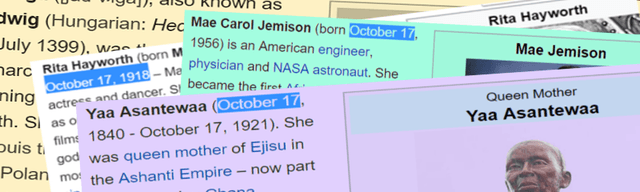
Wikimedia Commons / Public Domain
Yaa Asantewaa
Queen Mother of Ejisu who led the Ashanti army against British colonial forces in the War of the Golden Stool, one of the last major anti-colonial wars in West Africa, led by a woman.
Biography
Nana Yaa Asantewaa was born around 1840 in Besease, in the Ashanti Empire, the territory now known as Ghana. Her brother, Nana Akwasi Afrane Okpase, was a chief, and appointed her Queen Mother of Ejisu, a position of great political and spiritual authority in Ashanti society.
She was a farmer, mother, and community leader. She would not have described herself as a warrior. But when the British came for the Golden Stool, she became one.
Historical Context
The Golden Stool (Sika Dwa Kofi) is not merely a piece of furniture. It is the soul of the Ashanti nation, believed to contain the sunsum (spirit) of the Ashanti people. To sit upon it is desecration. To surrender it is annihilation.
In 1900, the British governor Sir Frederick Hodgson marched into Kumasi and demanded that the Ashanti chiefs bring him the Golden Stool so he could sit on it. The chiefs were stunned into silence.
Yaa Asantewaa was not.
What She Fought For
According to Ashanti tradition, Yaa Asantewaa stood before the assembled chiefs and challenged them directly: if the men would not fight, the women would. She picked up a gun, fired it into the air, and declared war.
She became the military commander of the Ashanti forces in what became known as the War of the Golden Stool (also called the Yaa Asantewaa War), one of the last major armed anti-colonial uprisings in West Africa. For months, her forces besieged the British garrison at Kumasi, cutting supply lines and nearly forcing a British withdrawal.
She fought not only for independence but for the preservation of Ashanti identity, sovereignty, and spiritual culture against colonial erasure.
Major Achievements
- Commanded the Ashanti army against British colonial forces (1900)
- Led one of the longest sieges of a British garrison in West African colonial history
- Became a symbol of African female leadership and military command
- The annual Yaa Asantewaa Festival in Ghana commemorates her resistance
- A museum in Ejisu is named in her honour
Her Impact Today
Yaa Asantewaa was captured and exiled to the Seychelles, where she died in 1921. She never surrendered the Golden Stool. The British never found it. It remains in Kumasi, with the Ashanti people, to this day.
Her image appears on Ghanaian currency. Her story is taught in schools across West Africa. She is a model of resistance that cuts across gender, proof that the fight for a people's dignity has never been a man's work alone.
Sources: Wikipedia (Yaa Asantewaa), Encyclopædia Britannica, Ashanti Cultural Documentation
Know an African woman whose story should be here?
Suggest a woman