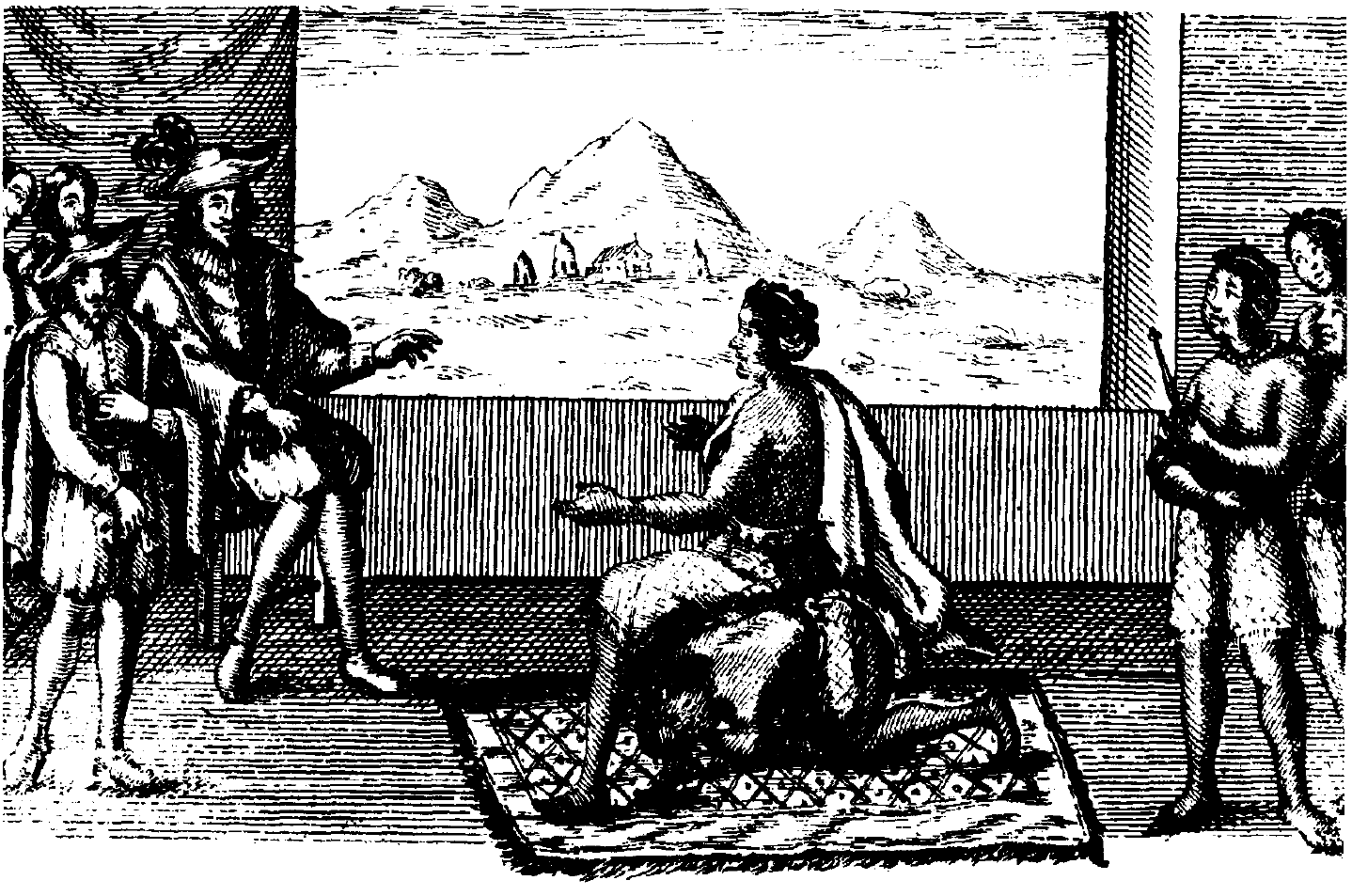
Wikimedia Commons / Public Domain
Nzinga of Ndongo and Matamba
Queen of Ndongo and Matamba who resisted Portuguese colonisation and the slave trade for four decades through diplomacy, alliance-building, and military leadership.
Biography
Nzinga Mbande (also Njinga or Nzingha) was born around 1583 into the royal family of Ndongo, an Ambundu kingdom in what is now northern Angola. Her name is linked to the Kimbundu word kujinga ("to twist or turn"). Legend says she was born with the umbilical cord around her neck. She was trained in politics and warfare and learned to read and write Portuguese from missionaries.
She became a central figure in Ndongo's dealings with the Portuguese. In 1622 she led a diplomatic mission to the Portuguese governor; accounts say she had a servant kneel as her chair to assert equal status. She became queen of Ndongo in 1624 after her brother's death and later ruled the kingdom of Matamba as well.
Historical Context
The Portuguese had been on the Angolan coast since the 16th century, seeking slaves and territory. Ndongo and neighbouring kingdoms faced military pressure, slave raids, and political interference. Nzinga ruled in a context of constant negotiation, alliance, and conflict with the Portuguese and with other African powers, including the Imbangala.
What She Fought For
Nzinga fought to preserve Ndongo and Matamba's sovereignty and to limit Portuguese expansion and the slave trade. She used diplomacy, strategic marriages and alliances (including with Imbangala leaders and, for a time, the Dutch), and military force. She led troops into battle and reshaped court and military structures to keep power in her hands. After a long conflict, a peace treaty with Portugal was signed in 1656; she ruled until her death in 1663.
Major Achievements
- Queen of Ndongo (1624–1663) and Matamba (1631–1663)
- Resisted Portuguese colonisation and slave-trade expansion for decades
- Formed alliances with the Dutch and Imbangala to counter Portuguese power
- Secured a peace treaty with Portugal in 1656
- Remembered for political skill, military leadership, and diplomatic strength
Her Impact Today
Nzinga is a national symbol in Angola and a global icon of African female leadership and resistance to colonialism. Statues, streets, and schools bear her name. UNESCO and others have highlighted her in programmes on women in African history. Her story continues to inspire discussions about gender, power, and resistance in African history.
Sources: Wikipedia (Nzinga of Ndongo and Matamba), BlackPast.org, Encyclopædia Britannica
Know an African woman whose story should be here?
Suggest a woman