She Ran the Market: How African Women Have Always Controlled Trade
Long before modern business, African women were running trade networks, controlling markets, and building serious wealth. Here is why that history matters.
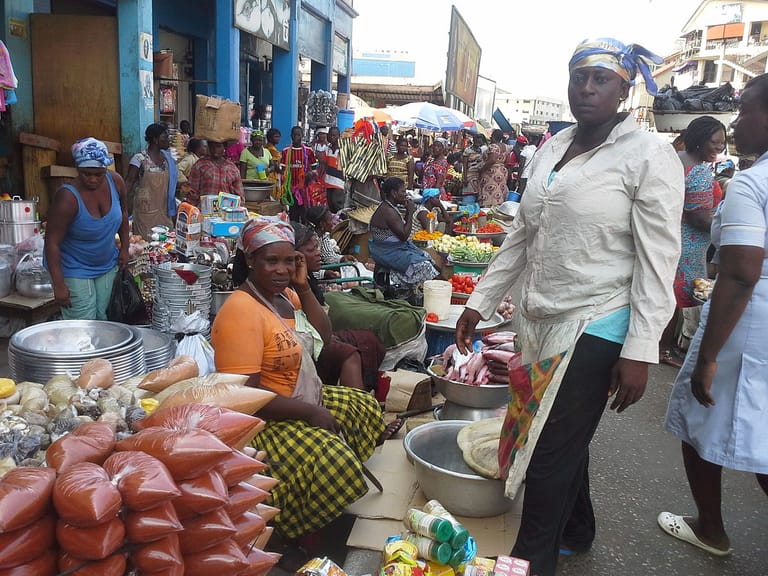
When people talk about African economics or business history, the conversation usually focuses on men. Kings who controlled trade routes. Merchants who travelled across the Sahara. But if you look closely at what was actually happening on the ground across West Africa for hundreds of years, you find something different. Women were running the markets. Women were controlling the economy. Women were the backbone of trade.
That is not a recent development. It is a history that goes back centuries.
The market as a space of power
Across West Africa, markets have always been more than places to buy and sell. They are community institutions. They are where information travels, where disputes get settled, where alliances are built, and where wealth is created and distributed.
For generations, women have been the ones who ran these spaces. In Nigeria, Ghana, Togo, Benin, and Côte d'Ivoire, women traders controlled the buying and selling of food, cloth, oil, and other goods. They were not just sellers. They were wholesalers, distributors, creditors, and market organisers. They gave credit to smaller traders. They negotiated prices. They managed supply chains before that term even existed.
This was real economic power.
What market women actually did
In southeastern Nigeria, women controlled the palm oil trade for generations. Palm oil was one of the most valuable commodities in West Africa. It was used for cooking, lighting, and later became an important export product during the colonial period. Women grew it, processed it, and sold it.
In Lagos and other coastal cities, women traders called "market queens" held authority over specific commodities. If you wanted to trade in a particular product in their market, you needed their approval. They set rules, resolved conflicts, and maintained order in commercial spaces that could involve hundreds or thousands of traders at a time.
In Dahomey, the kingdom in what is now Benin, women traders called "Nana Benz" became famous for controlling the wax-print fabric trade. Some of them became millionaires, and their wealth gave them enormous political influence. The name came from the fact that some of them were rich enough to own Mercedes-Benz cars.
This was not a small thing. This was economic leadership on a major scale.
Margaret Ekpo and the political power of market women
Margaret Ekpo understood something important. Economic power and political power are connected. When women control markets, they control communities. And when communities organise politically, market women are often at the centre of it.
Ekpo started as a market trader and used those connections to build one of the most powerful political movements in southeastern Nigeria in the 1950s. She mobilised market women, travelled to villages, and built a political base that took her to the Eastern House of Assembly. She proved that the skills you need to run a market are the same skills you need to run a movement.
The Aba Women's War: when market women fought an empire
In 1929, the British colonial government threatened to tax women traders in southeastern Nigeria. The response was immediate and massive. Women from across the Owerri and Calabar provinces organised, using the networks they had built through markets and trading relationships. At its peak, roughly 25,000 women were involved in what became known as the Aba Women's War.
They did not wait for anyone to lead them. They used systems they had already built. They moved information across thousands of square kilometres without phones or radio. They shut down colonial courts and forced the British government to back down.
That was market organisation applied to political resistance. The same networks that moved palm oil and cloth moved people and information when it mattered most.
What colonialism did to women's economic power
When European colonisers arrived, they brought their own ideas about gender and money. In Victorian-era Europe, women were not expected to own businesses or control wealth. Men were the heads of households and the economic actors.
The colonial system reflected those values. Land titles went to men. Banks gave loans to men. Formal business registration favoured men. Official trade records focused on male traders. Women's economic activity was made invisible in the official record, even when it was doing most of the work.
Over time, this had real effects. As economies formalised, women found themselves pushed out of the spaces they had previously controlled. What had been theirs was quietly transferred to a system that did not recognise them.
African women in business today
Despite those obstacles, African women remain some of the most economically active people on the continent. According to the World Bank, African women have among the highest rates of entrepreneurship in the world. More African women run businesses compared to women in most other regions globally.
But they still face serious barriers. They receive a fraction of available credit. They are less likely to get bank loans. They face more regulatory obstacles than male entrepreneurs. And they are still often invisible in the official stories we tell about African business and economics.
Why this history matters
Understanding that African women have always been economic leaders changes several things.
It challenges the idea that women in business is a new or foreign concept in Africa. It is not. Women running markets, controlling trade, and building wealth is one of the oldest economic traditions on the continent.
It gives a different lens for understanding African economic history. When we only look at formal systems and official records, we miss most of what was actually happening. When we include women, the picture gets more complete and more accurate.
And it gives girls today a foundation to stand on. If your grandmother's grandmother ran a trading network that spanned multiple states, then building a business is not just possible for you. It is in your history. It is something women like you have always done.
What to take away
- For centuries, women across West Africa controlled markets, trade networks, and significant amounts of wealth.
- Women like the Nana Benz of Dahomey and market queens across Nigeria ran serious economic operations.
- Market women's networks were powerful enough to organise the 1929 Aba Women's War against the British Empire.
- Colonialism pushed women out of formal economic systems, but it never removed their economic activity entirely.
- African women today are among the most entrepreneurial people in the world, continuing a tradition that is centuries old.
- When we include women in economic history, we get a better and more honest picture of how Africa actually worked.
The market was never just a market. It was a seat of power. And for a very long time, women were the ones sitting in it.