The Daughters of Independence: Women Who Fought for a Free Africa
Behind every African independence movement were women who organised, sacrificed, and fought, then were largely written out of the story. It is time to write them back in.
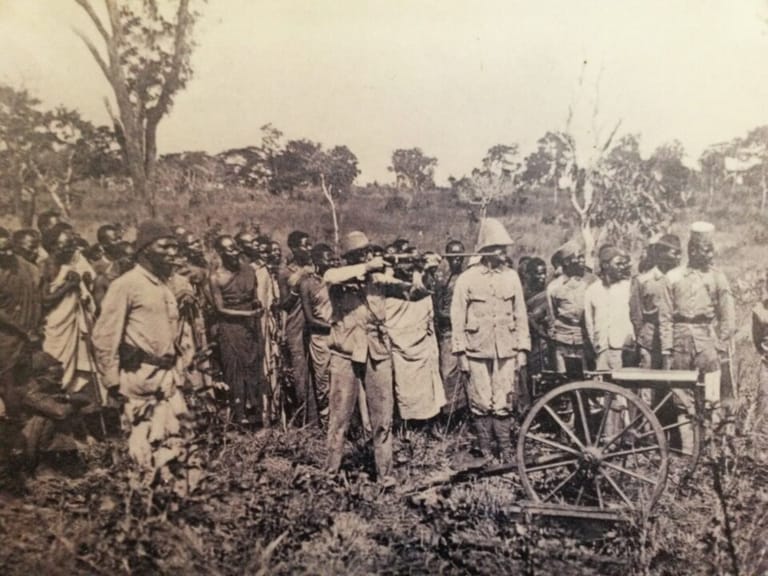
Africa's independence movements are usually told as men's stories. Nkrumah, Mandela, Lumumba, Kenyatta, Nyerere. These men were remarkable, and their contributions were real. But behind, beside, and sometimes in front of them were women who organised communities, endured prison, smuggled information, led protests, and kept movements alive when their male counterparts were imprisoned or exiled. Those women were written out of the official story. Here, we write them back in.
Nigeria: women who demanded political power
Before Nigerian independence in 1960, Funmilayo Ransome-Kuti had already demonstrated what mass women's political organising looked like. Her Abeokuta Women's Union brought together 100,000 women, toppled a colonial-appointed king, and won the abolition of taxation on women. She represented Nigeria at international women's conferences worldwide and advocated for women's political rights at a time when women were not expected to have political opinions at all.
Margaret Ekpo went further. A market woman who taught herself politics from the ground up, she became one of the most powerful political organisers in southeastern Nigeria in the 1950s. She was elected to the Eastern House of Assembly in 1954, one of the first women elected to any legislative body in Nigeria. She used that platform to fight for women's right to vote, for market women's rights, and for the communities she came from.
Gambo Sawaba did it from the north. In a deeply conservative society, she organised poor women, was arrested and imprisoned multiple times, and became one of the most recognisable women's rights activists in the Muslim north of Nigeria. She was flogged. She was imprisoned. She kept going.
These women did not benefit from independence the way they had fought for. Nigeria's post-independence governments remained male-dominated. But they built the foundation.
South Africa: women on the frontlines of apartheid
The anti-apartheid struggle produced some of the most courageous women in modern African history.
Lilian Ngoyi was the first woman elected to the executive committee of the African National Congress. In 1956, she co-organised the Women's March on Pretoria, where 20,000 women marched to the Union Buildings to protest the pass laws, dropping stacks of signed petitions and singing "Wathint' Abafazi, Wathint' Imbokodo!", meaning "You strike the women, you strike a rock!" The slogan became the defining cry of South African women's resistance.
Albertina Sisulu was arrested, banned, imprisoned, and harassed for decades by the apartheid government. During the years when her husband Walter was in prison on Robben Island, she raised their children, ran their household, continued organising, and refused to be silenced or exiled. She was called the "Mother of the Nation", not as a sentimental title, but as recognition that she held communities together through some of the hardest years of the struggle.
Winnie Madikizela-Mandela kept Nelson Mandela's name alive during 27 years of his imprisonment, at enormous personal cost. She was banished to a remote town, placed under house arrest, imprisoned and tortured in solitary confinement. She emerged not broken but fiercer. However complicated her legacy became later, her role in sustaining the anti-apartheid movement during its darkest years was irreplaceable.
Kenya: the women who were not supposed to lead
When the Mau Mau uprising against British colonial rule ignited in Kenya in the early 1950s, women were central to its survival as couriers, suppliers, cooks, intelligence gatherers, and fighters. The British colonial government, and later many accounts of the Mau Mau, overlooked women's roles because women were not supposed to be fighters. But they were.
Women carried ammunition in baskets of vegetables. They smuggled food to fighters in the forest. They maintained communication networks across communities. They were arrested, detained, and subjected to the same brutal interrogation methods as men.
Mekatilili wa Menza had shown what was possible a generation earlier. In 1913, she led the Giriama people of coastal Kenya in resistance against British forced labour and taxation. She travelled from village to village, inspiring women in particular to resist. She was captured and deported, but the resistance she ignited did not die with her arrest.
Zimbabwe: the spirit that would not be silenced
Nehanda Charwe Nyakasikana was executed by the British in 1898 for her role in leading the First Chimurenga, the Shona and Ndebele uprising against colonial rule. Her reported last words were: "My bones will rise." They did. Decades later, during the Second Chimurenga that brought Zimbabwe's independence in 1980, freedom fighters wore amulets in her name and invoked her spirit. A woman executed in 1898 was still organising the resistance in the 1970s. That is the kind of power that does not die.
What was lost after independence
In nearly every African country, independence arrived and women's contributions were acknowledged in speeches, then largely forgotten in practice. The new governments were male-dominated. Constitutions were written that formally included women but practically excluded them from power. Women who had fought, organised, smuggled, and been imprisoned found themselves returned to domestic roles once the flags were raised.
Hafsat Abiola was born into this contradiction. Her father Moshood Abiola won the freest election in Nigerian history in 1993, only to have the result annulled by the military. Her mother Kudirat Abiola campaigned tirelessly for her father's release and was assassinated for it in 1996. Hafsat turned that personal tragedy into a lifelong commitment to democracy and women's political power in Nigeria.
The pattern repeated across the continent: women fought for independence and got exclusion as the reward. The second liberation, the fight for women's full political participation, is still being waged.
What to take away
- Africa's independence movements were built on the labour, sacrifice, and courage of women who are largely absent from official histories.
- Nigerian women like Funmilayo Ransome-Kuti, Margaret Ekpo, and Gambo Sawaba fought for political rights before and after independence.
- South African women like Lilian Ngoyi, Albertina Sisulu, and Winnie Madikizela-Mandela were irreplaceable forces in the anti-apartheid struggle.
- Women fighters and supporters were central to resistance movements in Kenya, Zimbabwe, Angola, and across the continent.
- After independence, women's contributions were often forgotten and women were excluded from the political power they had fought to win.
- The fight for women's full political participation in Africa is a continuation of the independence struggle, not a separate issue.
Independence was won by women too. A free Africa that excludes women from power is not yet fully free.