Wikimedia Commons
Ladi Kwali
Nigerian potter who brought Gwari pottery to world attention. Featured on the Nigerian 20-naira note; MBE; bridged traditional hand-building and studio ceramics.
Biography
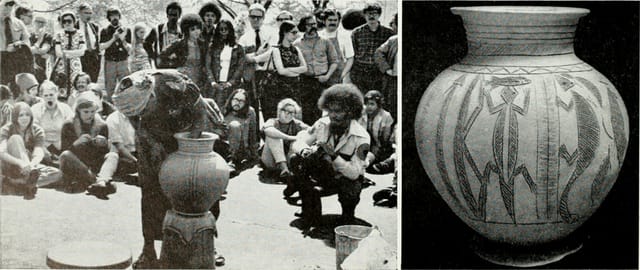
Ladi Kwali was born in 1925 in the village of Kwali, in what is now the Abuja area of Nigeria. She learned pottery in the Gwari tradition — hand-building and coiling — and became known for her large water jars and storage pots, decorated with incised and applied patterns.
In the 1950s she was discovered by Michael Cardew, who had set up the Pottery Training Centre in Abuja. She joined the centre and adapted her skills to wheel-thrown and glazed work while continuing to make traditional pieces. Her work was exhibited in Europe and she became one of the best-known African potters of the 20th century.
Historical Context
Nigerian independence and the growth of cultural institutions created new interest in traditional arts. Ladi Kwali’s collaboration with Cardew’s centre showed that indigenous techniques could sit alongside studio pottery and that women potters deserved recognition as artists.
What She Fought For
Ladi Kwali did not set out as a political activist; her legacy is the visibility and respect for African women’s craft. She demonstrated that traditional pottery was art, preserved Gwari methods, and inspired generations of Nigerian and African potters. She was awarded the MBE in 1963 and honoured by the Nigerian government.
Major Achievements
- Brought Gwari pottery to international attention; exhibited in Britain and elsewhere
- Featured on the Nigerian 20-naira note
- Awarded MBE (1963); honorary doctorate from Ahmadu Bello University
- Pottery Training Centre, Abuja; her work in major museum collections
Her Impact Today
Ladi Kwali died in 1984. She is remembered as a master potter who bridged tradition and modernity and who put Nigerian women’s ceramics on the map. Streets, awards, and the naira note keep her name and image in circulation.
Sources: Wikipedia (Ladi Kwali), British Museum, Nigerian currency
Know an African woman whose story should be here?
Suggest a woman