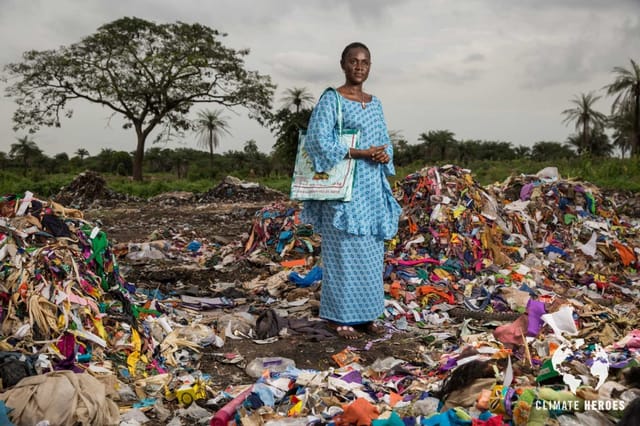
Isatou Ceesay at a waste site in The Gambia / Photo: Luke Duggleby / Climate Heroes
Isatou Ceesay
Gambian environmental activist known as the 'Queen of Recycling' who empowers women by transforming plastic waste into income-generating products.
Biography
Isatou Ceesay is a Gambian environmental activist and social entrepreneur known for pioneering community-based recycling initiatives in rural Gambia. Born in the village of Njau, she grew up witnessing the environmental and health challenges caused by plastic waste, particularly in low-income communities.
She began her work in the early 2000s with a focus on educating women about the dangers of improper waste disposal. Through grassroots organizing, she helped local women transform discarded plastic into reusable and sellable products such as bags, purses, and home items. Her work quickly expanded beyond environmental awareness into economic empowerment.
Ceesay became widely known as the “Queen of Recycling” for her innovative approach to turning waste into wealth while improving community health.
Historical Context
In the early 2000s, The Gambia, like many developing countries, faced increasing challenges with plastic waste due to rising consumption and limited waste management infrastructure. Rural communities were particularly affected, with plastic often burned or buried, leading to soil degradation, toxic fumes, and harm to livestock.
At the same time, many women in these communities had limited access to formal employment or income-generating opportunities. Environmental issues and economic hardship were deeply interconnected.
Ceesay’s work emerged at the intersection of these challenges, addressing both environmental degradation and gender-based economic inequality.
What She Fought For
Isatou Ceesay’s work is rooted in the belief that environmental problems and economic hardship are deeply connected, especially in rural African communities. In the early 2000s, she began addressing the growing plastic waste crisis in The Gambia not as an isolated environmental issue, but as a threat to health, livelihoods, and dignity.
She focused particularly on the impact of plastic pollution on women, who often bear the burden of maintaining household health and managing limited resources. By educating women on the dangers of burning and improper disposal of plastic, she reframed waste as both a hazard and an opportunity.
Through hands-on training, Ceesay equipped women with the skills to collect, clean, and transform discarded plastic into usable and sellable products. This approach challenged the idea that solutions must come from outside communities, instead proving that sustainable change can be locally driven.
Her work is a quiet but powerful form of activism — one that fights environmental degradation, economic exclusion, and gender inequality all at once.
Major Achievements
- Founded the Njau Recycling and Income Generation Group, which trains women to recycle plastic waste into marketable goods
- Helped reduce plastic pollution in multiple Gambian communities
- Created sustainable income streams for hundreds of rural women
- Gained international recognition for grassroots environmental activism
- Featured in global media and environmental platforms for her innovative model
Her Impact Today
Today, Isatou Ceesay’s work continues to influence environmental activism across Africa and beyond. Her model of community-based recycling has been replicated in other regions as a practical solution to both pollution and poverty.
She has helped shift the perception of waste from a problem into an opportunity, especially for women in underserved communities. Her work aligns with global sustainability goals and demonstrates how local action can contribute to broader environmental change.
Ceesay remains an inspiration for young activists, particularly women, showing that meaningful impact can begin at the community level and grow into global recognition.
Sources: Wikipedia (Isatou Ceesay), environmental NGO publications, and interviews on grassroots sustainability initiatives.
Know an African woman whose story should be here?
Suggest a woman