The Tignon Laws: When a Headwrap Became Resistance
In 1786, colonial Louisiana tried to control Black women by forcing them to cover their hair. They turned the restriction into one of history's most powerful fashion statements.
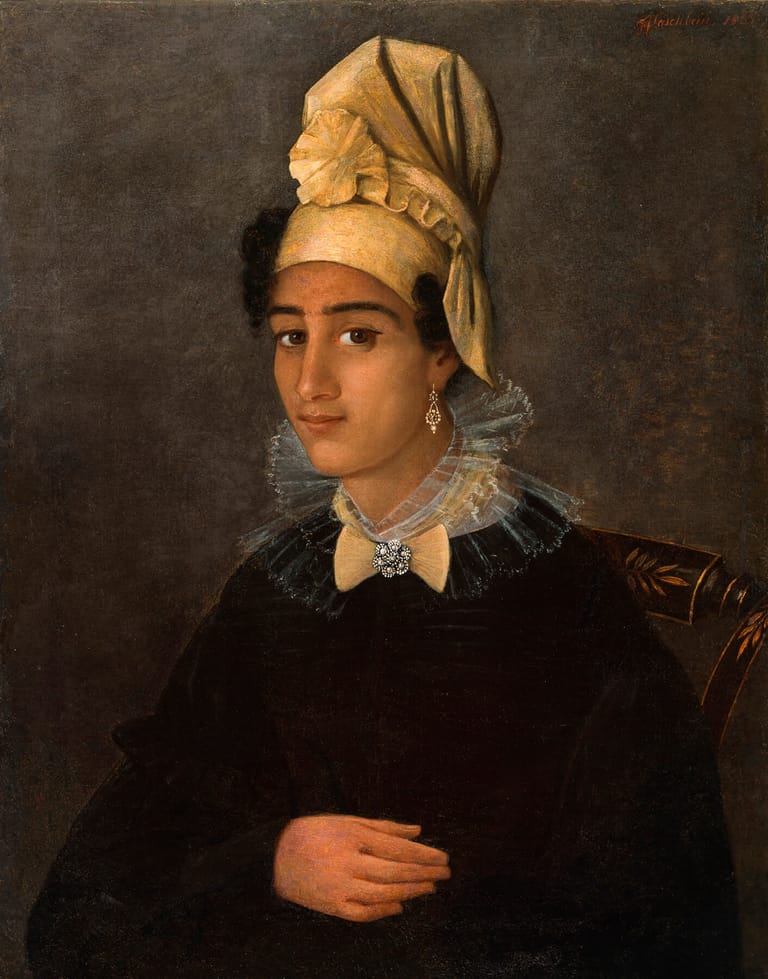
Picture this. It is the late 1700s in colonial Louisiana. Black women, both free and enslaved, are walking through the streets of New Orleans dressed in ways that make people stop and stare. They wear elegant fabrics. They style their hair in elaborate, eye-catching ways. They adorn themselves with feathers, jewels, and accessories that rival anything worn by the wealthiest white women in the colony.
They are beautiful. They know it. And that, apparently, is a problem.
The "threat" of a well-dressed Black woman
Colonial Louisiana operated on a strict racial hierarchy. White colonists sat at the top. Black people, whether enslaved or free, were supposed to remain at the bottom. Every part of daily life was designed to reinforce that order. Where you could live, where you could walk, who you could speak to, and how you could present yourself were all governed by race.
But Black women in New Orleans were not cooperating with the script.
Free women of colour, in particular, carried themselves with a confidence and style that blurred the lines colonists had drawn. Their clothing was fine. Their hair was stunning. Their presence in public spaces drew the attention of white men and the fury of white women. In a society built on the idea that Black people were inferior, the sight of Black women looking undeniably magnificent was treated not as beauty, but as a threat.
The colonial authorities decided something had to be done.
The law that tried to erase beauty
In 1786, Governor Esteban Rodríguez Miró of Spanish Louisiana enacted what became known as the Tignon Laws. The laws were part of a broader set of rules called the Code Noir, which regulated the lives of Black people in the colony.
The Tignon Laws had a specific target: Black women's appearance. The laws required all Black women, whether free or enslaved, to cover their hair with a tignon, a type of knotted headwrap. They were also forbidden from wearing jewellery, feathers, or any adornment in their hair that might signal wealth or status.
The intent was not subtle. Colonial authorities wanted to mark Black women as belonging to a lower class, regardless of their actual wealth or freedom. If a Black woman looked too elegant, too refined, too desirable, she disrupted the racial order. The headwrap was meant to be a badge of inferiority. A way of saying: no matter how you carry yourself, we decide where you belong.
It was control dressed up as law.
What the women did next
Here is where the story turns. Because the women of New Orleans did not break. They did not shrink. They did something far more powerful than protest. They created.
Forced to cover their hair, Black women began wrapping their tignons in ways that were anything but humble. They chose the most vibrant fabrics they could find. Deep indigos, rich magentas, bright golds, and bold patterns. They wrapped them high, twisted them into elaborate shapes, pinned them with brooches, and folded them into styles that were more striking than the hairstyles they had been forced to hide.
The tignon was supposed to make them invisible. Instead, it made them unforgettable.
Women turned the headwrap into a language. The way you tied it could signal your status, your community, your mood. A particular fold might indicate that a woman was free. A certain fabric might speak to her wealth. What had been forced upon them as a uniform of shame became a canvas for creativity, identity, and quiet defiance.
They did not need to march. They did not need to shout. They simply wrapped a piece of cloth around their heads and made it mean something the law never intended.
The irony nobody expected
The colonial authorities had hoped the tignon would diminish Black women's appeal and reinforce racial boundaries. The opposite happened.
The headwraps became so beautiful, so striking, so undeniably fashionable that they attracted even more attention than before. The tignon became a trend. And in one of history's sharpest ironies, white women in New Orleans began wearing headwraps too, imitating the very style that was meant to mark Black women as lesser.
A law designed to separate ended up inspiring imitation. A rule created to suppress became a source of influence. The women it was meant to diminish became the ones setting the standard.
A tradition that lives on
The tignon did not stay in the 1700s. The tradition of elaborate, intentional headwrapping has continued through generations of Black women across the diaspora. From the Caribbean to West Africa to modern-day New Orleans, the headwrap has remained a symbol of identity, heritage, and self-expression.
When you see a Black woman today wearing a beautifully wrapped headscarf, she is part of a lineage that stretches back centuries. She may not know the name Esteban Rodríguez Miró. She may never have heard of the Tignon Laws. But the spirit of those women in 1786, the refusal to let someone else define what beauty looks like, that lives in every fold and every knot.
Why this story matters
The Tignon Laws are not just a footnote in fashion history. They reveal something important about how systems of control work and how people resist them.
Oppression often targets how people present themselves. Throughout history, those in power have tried to regulate how marginalised people dress, wear their hair, and move through public spaces. The Tignon Laws are an early example of what we still see today in debates about natural hair, dress codes, and appearance-based discrimination.
Resistance does not always look like rebellion. The women of New Orleans did not organise a revolt. They did not burn anything down. They took what was forced on them and turned it into art. That is a form of resistance that is often overlooked but deeply powerful.
Creativity under constraint is a recurring theme in Black history. Jazz came from restriction. Blues came from suffering. The headwrap came from a law designed to humiliate. Over and over, Black communities have taken the worst of what was given to them and made something extraordinary out of it.
The story challenges the idea that fashion is trivial. How you present yourself to the world has always been political. The women of 1786 understood that a piece of cloth could carry as much meaning as a speech or a protest sign.
What to take away
- In 1786, colonial Louisiana enacted the Tignon Laws, forcing Black women to cover their hair with headwraps to mark their social status and limit their influence.
- Instead of accepting the restriction, Black women turned the tignon into elaborate, stunning fashion statements using vibrant fabrics and creative wrapping techniques.
- The headwraps became so admired that even white women began imitating the style, completely undermining the law's intent.
- The tradition of intentional headwrapping has continued through generations and remains a symbol of identity and self-expression in Black communities worldwide.
- The Tignon Laws are a powerful example of how what is meant to oppress can be transformed into something beautiful, defiant, and lasting.
They tried to make the headwrap a mark of shame. The women of New Orleans made it a crown. And centuries later, it still is.