Writing Africa Back: The Literary Women Who Refused to Be Invisible
The African women writers who put their continent's stories on the world map and fought to make sure those stories were told on their own terms.
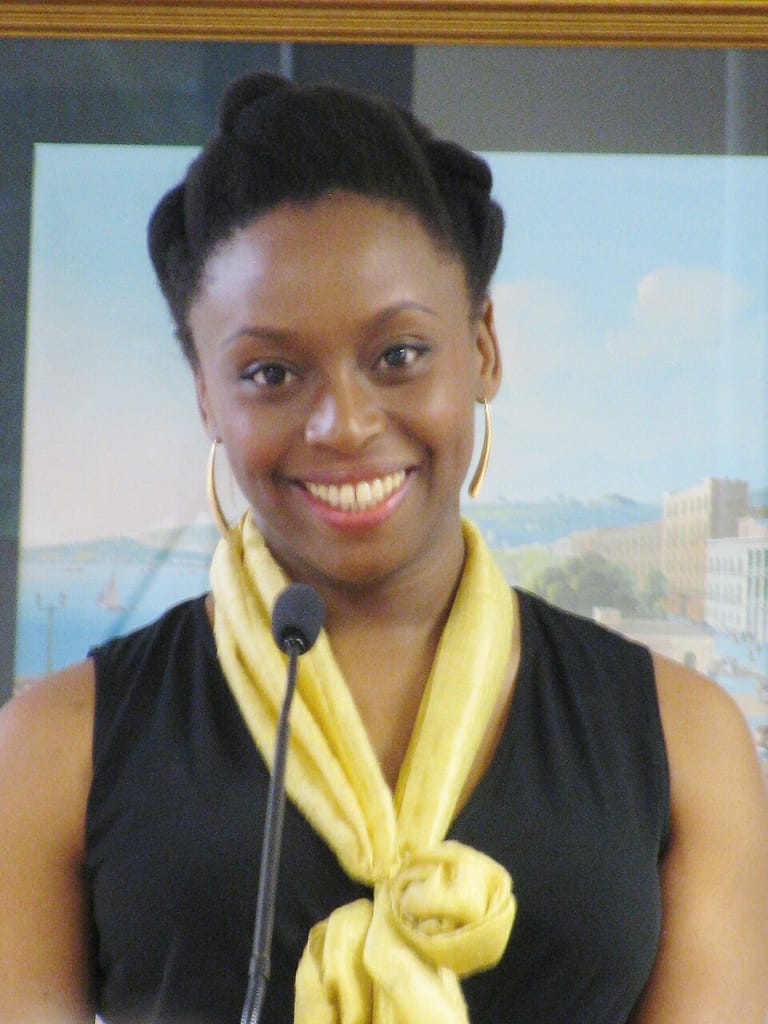
For most of the 20th century, the dominant stories told about Africa were told by outsiders: European explorers, colonial administrators, missionaries, and later, Western journalists and novelists. African people were characters in those stories, rarely the narrators. African women were the most invisible of all, present in the background as wives, mothers, and local colour, rarely as full human beings with inner lives, ambitions, and voices.
A group of writers decided to change that. They picked up pens and refused to put them down.
Flora Nwapa and the first African woman's voice
In 1966, Flora Nwapa published Efuru, the first novel by an African woman to be published by a major international publisher. That sentence deserves to sit for a moment. The first. Not one of the first. The first.
Efuru was set in an Igbo community in eastern Nigeria and told the story of a woman's inner life, her desires, her disappointments, her relationship with the oguta lake goddess Uhamiri, with a depth and tenderness that had never appeared in African fiction before, because no African woman had been allowed to write it.
Nwapa did not just write the book. She later founded her own publishing house, Tana Press, in 1977, becoming the first African woman to own and run a publishing company. She understood that if African women were going to tell their own stories, they needed to control the means of telling them.
Buchi Emecheta and the unvarnished truth
Buchi Emecheta arrived in London from Lagos in the 1960s with a husband, two small children, and no money. Her husband burned her manuscript when he found it. She rewrote it. He burned it again. She rewrote it again.
The result was In the Ditch (1972) and Second-Class Citizen (1974), raw, autobiographical accounts of being Black, female, poor, and Nigerian in 1960s London. They were unlike anything published before: no softening, no making things palatable for a Western audience, no pretending that things were fine. They were true.
Her later novels, particularly The Joys of Motherhood (1979) and Destination Biafra (1982), established her as one of the most important African novelists of the 20th century. She wrote eighteen novels in total while raising five children largely alone. She was appointed OBE in 2005. She said the honour was for the books, not for suffering.
Mariama Bâ and the letter that changed West African literature
In 1979, Senegalese writer Mariama Bâ published Une si longue lettre (So Long a Letter). It won the inaugural Noma Award for African literature in 1980. It changed West African literature permanently.
The novel takes the form of a letter written by a Senegalese woman to her friend after her husband takes a second wife. It is quiet, devastating, and absolutely clear-eyed about what polygamy does to women, not as an abstract cultural practice but as a lived reality that takes place in specific bodies, in specific households, with specific consequences.
Bâ was a schoolteacher, a divorcée raising nine children alone, and an activist for women's rights in Senegal. She published two novels before her death in 1981 at the age of 52. Two novels. The impact of those two books on African literary culture is incalculable.
Chimamanda Ngozi Adichie and the global moment
When Chimamanda Ngozi Adichie took the TED stage in 2009 and gave a talk called The Danger of a Single Story, she articulated something millions of people had felt but struggled to name: the damage done when one story is told about a person, a place, or a people, and all the other stories are crowded out.
She was talking about Africa. She was talking about herself. She was talking about the stories that get told and the stories that get erased.
Her 2012 TED talk We Should All Be Feminists went further, dismantling the word "feminist" and making the case for gender equality in language that was sharp, funny, and impossible to dismiss. When Beyoncé sampled it in Flawless, it reached hundreds of millions of people who had never heard Adichie speak. The essay was eventually published as a book and distributed to every 16-year-old in Sweden.
Adichie did not just write important books. She changed the global conversation about what it means to be African, female, and ambitious in the 21st century.
The tradition they built
These four writers, Nwapa, Emecheta, Bâ, and Adichie, are part of a broader tradition of African women who wrote their continent back into existence on its own terms. Behind them are dozens of others: Ama Ata Aidoo of Ghana, Tsitsi Dangarembga of Zimbabwe, Chimamanda's Igbo predecessor Chinelo Okparanta, Petina Gappah, Sefi Atta, NoViolet Bulawayo.
They are all doing the same essential work: refusing to let someone else tell their story. Refusing the single story. Insisting on the full, complicated, beautiful, painful, multiple stories that make up a continent of 1.4 billion people.
Why stories matter
This is not just about literature. Stories shape reality. The stories we tell about a place determine what people believe is possible there. If the only stories told about African women are stories of victimhood, passivity, or invisibility, then that shapes how African women see themselves and how the rest of the world sees them.
When Flora Nwapa wrote a Igbo woman's inner life in 1966, she told every Igbo woman who read it: your inner life matters. Your story is worth telling. You are not a background character in someone else's narrative. You are the narrator.
That is what these writers gave, and what writers working today continue to give.
What to take away
- Flora Nwapa published the first novel by an African woman with a major international publisher in 1966 and later founded Africa's first female-owned publishing house.
- Buchi Emecheta wrote 18 novels while raising five children alone, refusing to soften or sanitise the truth of African women's lives.
- Mariama Bâ's So Long a Letter changed West African literature and told the truth about polygamy's human cost.
- Chimamanda Ngozi Adichie brought African feminist thought to a global audience, changing how millions of people think about Africa, gender, and storytelling.
- African women writers have always been doing the essential work of refusing to let their continent and their communities be defined by outsiders.
- Stories are not decorations. They are the way we understand what is possible. African women writing their own stories is an act of power, not just an act of creativity.
Every time an African woman writes her own story, the world gets a little more accurate.