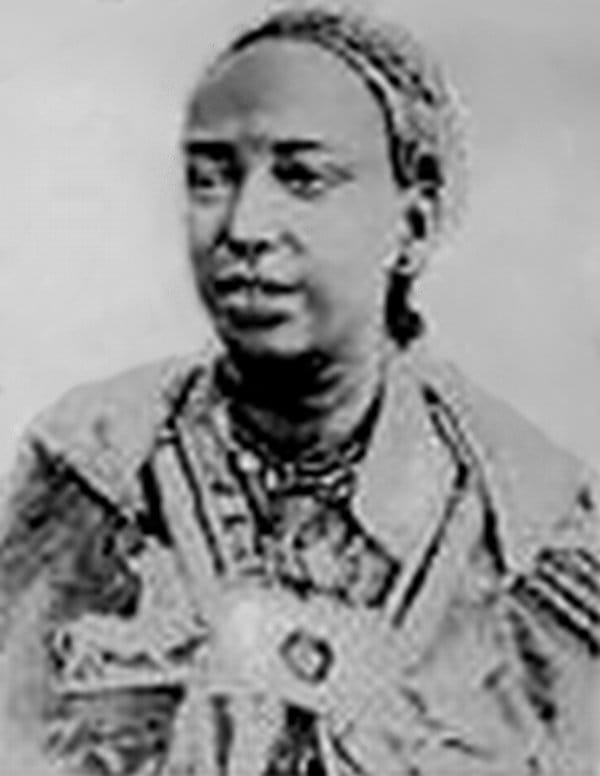
Wikimedia Commons / Public Domain
Taytu Betul
Empress of Ethiopia (1889–1913) who co-ruled with Menelik II. Key figure in the Battle of Adwa and in resisting Italian colonisation; founded Addis Ababa.
Biography
Taytu Betul was born around 1851 into the Ethiopian nobility. She was well educated and politically astute. She married Menelik II, then King of Shewa, who became Emperor of Ethiopia in 1889. As Empress (Itege), she was not a passive consort but a full partner in policy, diplomacy, and war.
She played a central role in the lead-up to the Battle of Adwa (1 March 1896), in which Ethiopian forces defeated the Italian army, one of the few decisive African victories over a European colonial power in the 19th century. She is also credited with choosing the site and name of Addis Ababa, which became the capital.
Historical Context
In the late 19th century, European powers were carving up Africa. Italy had signed the Treaty of Wuchale with Ethiopia, which Rome interpreted as making Ethiopia a protectorate. Menelik II and Taytu rejected that reading. Taytu was instrumental in mobilising resistance, in diplomacy, and in the decision to fight at Adwa rather than accept Italian demands.
What She Fought For
Taytu Betul fought for Ethiopian sovereignty and independence from European colonisation. She opposed concessions to Italy and helped rally the empire for war. She was involved in military planning, in managing the court and the army’s logistics, and in negotiations. After Adwa, she continued to influence state policy until Menelik’s health declined and she was sidelined by rival nobles; she died in 1918.
Major Achievements
- Empress of Ethiopia (1889–1913); co-ruler with Menelik II
- Key figure in the Battle of Adwa (1896) and in resisting Italian colonisation
- Credited with founding Addis Ababa as the capital
- Remembered as a skilled politician and strategist who defended Ethiopian independence
Her Impact Today
Taytu Betul is honoured in Ethiopia as a national hero. She symbolises resistance to colonialism and the role of women in defending sovereignty. Her legacy is part of the story of why Ethiopia remained independent when most of Africa was colonised.
Sources: Wikipedia (Taytu Betul), Encyclopædia Britannica
Know an African woman whose story should be here?
Suggest a woman