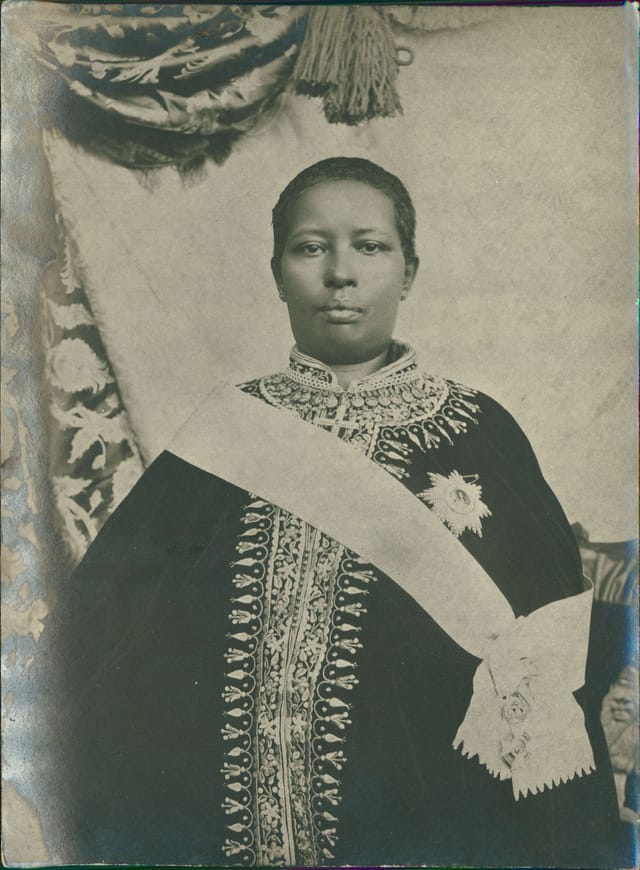
Wikimedia Commons / Public Domain
Empress Zewditu
Empress of Ethiopia from 1916 to 1930, the first woman to head an internationally recognised African state in modern history. She preserved Ethiopian sovereignty during the scramble for Africa.
Biography
Zewditu Menelik was born on 29 April 1876, the daughter of Emperor Menelik II, who had defeated Italy at the Battle of Adwa. She was raised in the Ethiopian court and married several times as part of the political alliances that held the empire together.
In 1916, following the deposition of Emperor Iyasu V, Zewditu was proclaimed Empress (Negiste Negest, "Queen of Kings") of Ethiopia, with Ras Tafari Makonnen (the future Haile Selassie) as regent and heir apparent.
Historical Context
Ethiopia in the early 20th century was one of the only African states to remain independent during the European scramble for the continent. But it was not free from pressure. European powers surrounded Ethiopia on all sides, and internal factions competed for control. The relationship between Empress Zewditu and Regent Ras Tafari was defined by this tension: she represented the conservative, Orthodox Christian establishment; he represented modernisation and engagement with the outside world.
What She Fought For
Zewditu fought for Ethiopian sovereignty and Orthodox Christian tradition during a period of enormous internal and external pressure. She resisted rapid modernisation that she believed would erode Ethiopian identity, while navigating the demands of European powers who sought to draw Ethiopia into their sphere of influence.
She maintained Ethiopia's membership in the League of Nations (one of the few non-European, non-American members) and preserved the country's independence during her reign. She was a patron of churches and religious institutions.
Major Achievements
- First woman to serve as head of an internationally recognised African state in modern history
- Preserved Ethiopian independence and sovereignty during the colonial era
- Oversaw Ethiopia's entry into the League of Nations (1923)
- Patron of the Ethiopian Orthodox Church, funding the construction of churches and religious schools
Her Impact Today
Empress Zewditu died on 2 November 1930. Her reign is often overshadowed by the legacy of Haile Selassie, who succeeded her. But she held the throne during one of the most precarious periods in Ethiopian history, and Ethiopia remained free.
She is remembered in Ethiopia as a defender of tradition and sovereignty. Her legacy is a reminder that African women held the highest offices of state long before the 20th century.
Sources: Wikipedia (Zewditu), Encyclopædia Britannica, Ethiopian National Archives
Know an African woman whose story should be here?
Suggest a woman