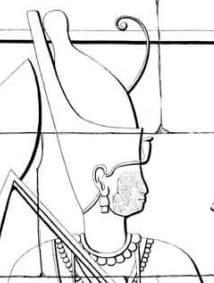
Wikimedia Commons / Public Domain
Kandake Amanirenas
Queen of the Kingdom of Kush who led her armies against the Roman Empire, famously defeating Roman forces in battle and negotiating a peace treaty that kept her kingdom independent for generations.
Biography
Kandake (Queen) Amanirenas ruled the Kingdom of Kush — centred in what is now northern Sudan — from approximately 40 BC to 10 BC. She was one of a long line of powerful Nubian queens, known as Kandakes, who ruled Kush as equals to or independently of their kings. Historical accounts describe her as blind in one eye, having lost it in battle — a detail that only added to her fearsome reputation.
She came to power during a period of tension between Kush and the Roman Empire, which had recently conquered Egypt and was expanding southward along the Nile. When Roman forces threatened Kushite territory, Amanirenas did not wait to be attacked — she struck first.
Historical Context
The Kingdom of Kush was one of Africa's most powerful and long-lived civilisations, lasting from approximately 1070 BC to 350 AD. Located along the Nile in present-day Sudan, Kush developed its own writing system (Meroitic script), built pyramids, and maintained sophisticated trade networks. The Kushites had a unique tradition of powerful queens — the Kandakes — who held political and military authority.
After Rome annexed Egypt in 30 BC following the death of Cleopatra, Roman garrisons pushed southward into Nubian territory, taxing local populations and threatening Kushite sovereignty. This set the stage for one of the ancient world's most remarkable military confrontations.
What She Fought For
In approximately 27 BC, Kandake Amanirenas launched a military campaign against Roman-held territory in southern Egypt. Her forces attacked and captured the Roman garrison towns of Syene (modern Aswan), Elephantine, and Philae. In a symbolic act of defiance, her soldiers decapitated a statue of the Roman Emperor Augustus and buried the bronze head beneath the steps of a temple in Meroë — so that every Kushite who entered would symbolically step on Rome.
The Romans counterattacked under the general Petronius, pushing deep into Kushite territory and destroying the city of Napata. But Amanirenas regrouped and continued fighting, making the Roman occupation unsustainable. Eventually, the Romans agreed to negotiate.
The resulting Treaty of Samos (around 21–20 BC) was remarkably favourable to Kush: Rome withdrew from most of the contested territory, cancelled tribute demands, and established a demilitarised buffer zone. Kush maintained its independence and sovereignty — one of the very few peoples to force Rome to the negotiating table on equal terms.
Major Achievements
- Led Kushite armies against the Roman Empire, capturing Roman garrison towns in Upper Egypt
- Negotiated the Treaty of Samos, securing Kushite independence from Rome on favourable terms
- One of the few rulers in the ancient world to successfully resist Roman expansion
- Buried the head of Augustus's statue beneath temple steps as a lasting symbol of defiance
- Maintained Kushite sovereignty for generations after the treaty
Her Impact Today
Kandake Amanirenas is one of the most powerful examples of African resistance to foreign domination in ancient history. The bronze head of Augustus, buried on her orders, was excavated in 1910 and now sits in the British Museum — still a symbol of Kushite defiance. Her story challenges the erasure of African civilisations from world history and demonstrates that Africa's tradition of powerful women leaders stretches back millennia.
Sources: Wikipedia (Amanirenas), Strabo's Geographica, British Museum archives, UNESCO World Heritage (Meroë)
Know an African woman whose story should be here?
Suggest a woman