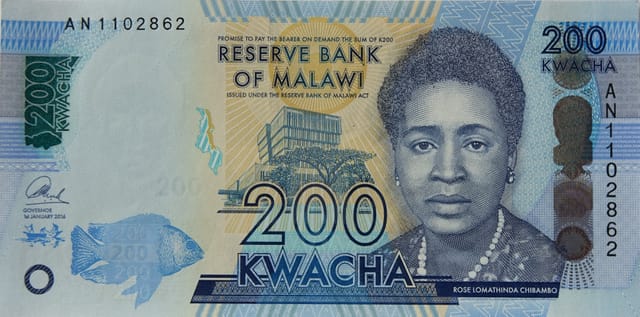
Wikimedia Commons / CC BY-SA 4.0
Rose Chibambo
Malawian independence activist and politician who was a founding leader of the Malawi Congress Party, mobilising women across the country in the fight against British colonial rule.
Biography
Rose Lomathinda Chibambo was born in 1928 in Malawi (then Nyasaland), a British protectorate in Southern Africa. She received limited formal education — as was common for African women under colonial rule — but possessed an extraordinary political instinct and organising ability.
She became politically active in the 1950s, joining the Nyasaland African Congress (NAC) and quickly rising through its ranks. She was one of the very few women in leadership positions within the independence movement, serving alongside figures like Hastings Kamuzu Banda, Orton Chirwa, and Henry Chipembere.
Historical Context
Nyasaland was part of the Central African Federation (1953–1963), a political union with Northern and Southern Rhodesia imposed by Britain against overwhelming African opposition. The federation entrenched white minority rule and was deeply unpopular among Africans in all three territories. The struggle to break up the federation and achieve independence became the defining political movement of 1950s Nyasaland.
Women in Nyasaland were expected to remain outside formal politics, but the urgency of the anti-colonial struggle created openings for determined women like Chibambo.
What She Fought For
Rose Chibambo was a founding member and leader of the Malawi Congress Party (MCP), the successor to the NAC. She mobilised women across Nyasaland, organising rallies, recruiting members, and building the grassroots networks that powered the independence movement. She was one of the few women delegates at key political conferences.
In 1959, during the colonial government's crackdown on the independence movement (Operation Sunrise), Chibambo was arrested and detained without trial alongside hundreds of other activists. Her imprisonment only strengthened her resolve and her standing in the movement.
After independence in 1964, she served in the Malawian parliament but soon fell out with President Banda's increasingly autocratic rule. She was among the "Cabinet Crisis" ministers who challenged Banda and was forced into exile, spending decades abroad.
Major Achievements
- Founding leader of the Malawi Congress Party
- One of the first women in Malawian political leadership
- Mobilised mass women's participation in Malawi's independence movement
- Detained during the colonial government's 1959 crackdown for her activism
- Served as a Member of Parliament in independent Malawi
- Stood against authoritarian rule at great personal cost
Her Impact Today
Rose Chibambo's role in Malawi's independence is increasingly recognised as central, not peripheral. She demonstrated that women were not bystanders in Africa's liberation struggles but leaders and strategists. Her willingness to sacrifice her freedom — both under colonial rule and under post-independence dictatorship — makes her one of Southern Africa's most principled political figures.
Sources: Wikipedia (Rose Chibambo), Malawi National Archives, Southern African History Online
Know an African woman whose story should be here?
Suggest a woman