Wikimedia Commons
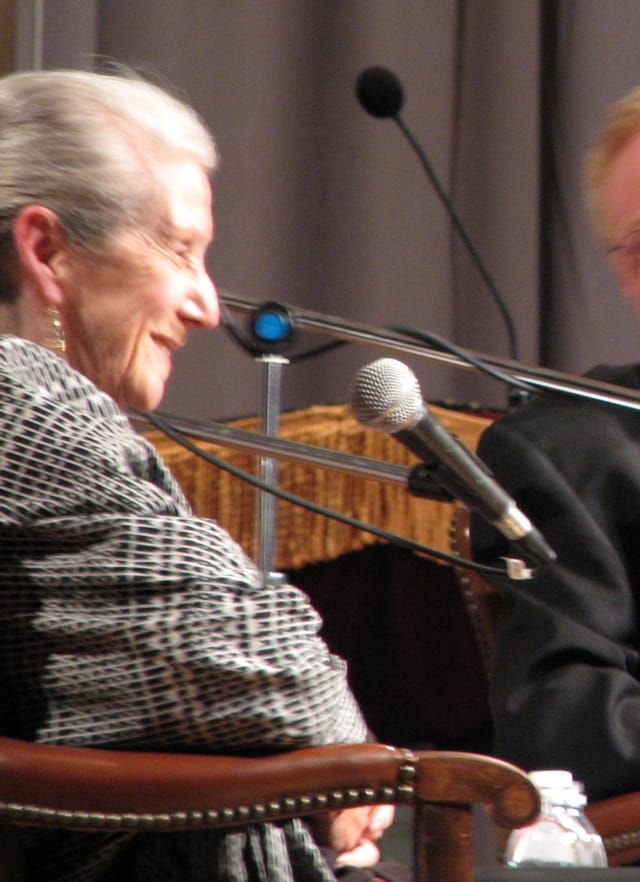
Nadine Gordimer
South African novelist and short-story writer. Nobel Prize in Literature (1991); used her work to oppose apartheid and to explore race, power, and moral responsibility.
Biography
Nadine Gordimer was born on 20 November 1923 in Springs, South Africa. She published her first story as a teenager and went on to write novels and short fiction that examined life under apartheid. She was banned and censored by the regime but continued to write and to support the liberation movement.
She was awarded the Nobel Prize in Literature in 1991 — the first South African to receive it — for, in the words of the Academy, her "magnificent epic writing" that "has been of very great benefit to humanity." She remained politically engaged after apartheid and spoke out on HIV/AIDS, censorship, and freedom of expression.
Historical Context
Under apartheid, many white South Africans benefited from or accepted the system. Gordimer used her position and her art to expose its cruelty and to side with the oppressed. Her books were read worldwide and helped shape international understanding of South Africa.
What She Fought For
Nadine Gordimer fought apartheid through literature and activism. She joined the ANC when it was still banned, hid activists, and used her international stature to support the struggle. She advocated for free speech, human rights, and moral clarity.
Major Achievements
- Nobel Prize in Literature (1991)
- Author of The Conservationist, July's People, Burger's Daughter, and many short stories
- Member of the ANC; supported the anti-apartheid movement at home and abroad
- Honoured globally for literature and human rights
Her Impact Today
Nadine Gordimer died on 13 July 2014. She is remembered as one of the 20th century’s great writers and as a conscience of South Africa who refused to look away from injustice.
Sources: Wikipedia (Nadine Gordimer), Nobel Prize
Know an African woman whose story should be here?
Suggest a woman