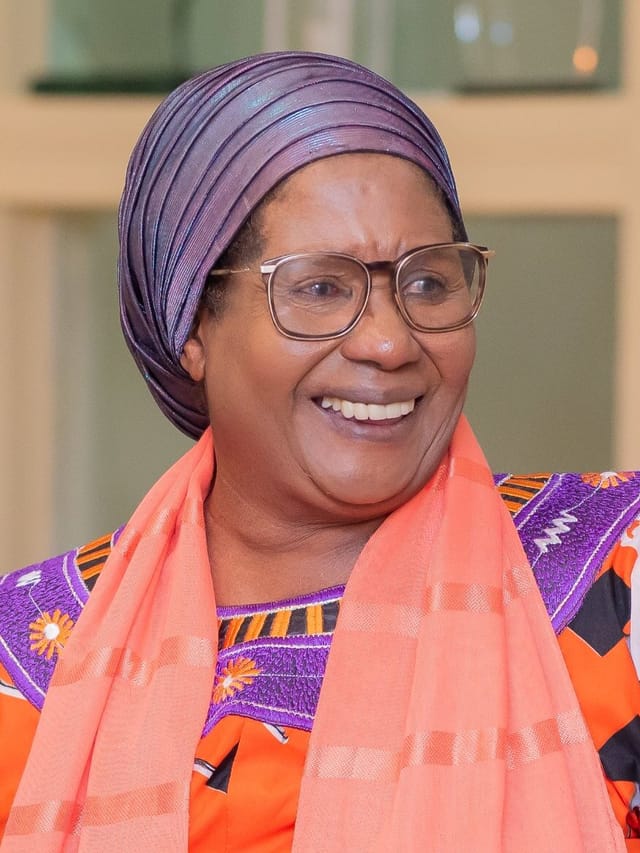
Wikimedia Commons / Public Domain
Joyce Banda
Malawian politician who became the first female president of Malawi and only the second female head of state in African history. She rose from humble beginnings to lead a country through a genuine economic crisis, and never stopped fighting for women and girls.
Biography
Joyce Hilda Banda was born on 12 April 1950 in Malemia, a small village in Zomba District, Malawi. Her early life was marked by hardship. She survived a difficult first marriage and rebuilt her life, going on to found a women's empowerment organisation called the National Association of Business Women in the 1980s. Through her grassroots work, she built a reputation as someone who genuinely cared about the lives of ordinary Malawian women.
She entered politics in 1999, winning a seat in the National Assembly. She served as Minister of Gender, Child Welfare, and Community Services, and later as Minister of Foreign Affairs. In 2009, she was elected Vice President of Malawi under President Bingu wa Mutharika.
When President Mutharika died suddenly of a heart attack in April 2012, Joyce Banda was constitutionally next in line. Despite attempts by members of Mutharika's party to prevent her from taking power, she was sworn in as President of Malawi, becoming the country's first female president and only the second female head of state in African history after Ellen Johnson Sirleaf.
What She Fought For
Banda inherited a country in economic crisis. Malawi had been cut off from donor funding due to concerns about governance under her predecessor. She responded with bold economic reforms: devaluing the Malawian kwacha, liberalising the foreign exchange market, and restoring relationships with international partners. Within months, fuel shortages eased and aid resumed.
She also made women and girls a priority. She banned child marriage for under-18s, a significant step in a country where child marriage was widespread. She championed girls' education and spoke openly about the connection between women's rights and economic development.
She ran for re-election in 2014 but lost amid allegations of corruption related to the Cashgate scandal, in which government officials stole large amounts of public money. She denied wrongdoing and the case was contested, but it damaged her reputation and she went into exile. She returned to Malawi in 2017 and remained active in politics.
Major Achievements
- First female President of Malawi (2012 to 2014)
- Second female head of state in African history
- Restored Malawi's international donor relationships through economic reform
- Banned child marriage for girls under 18
- Founded the National Association of Business Women in the 1980s
- Named one of Time magazine's 100 Most Influential People in the World (2012)
- Forbes Africa Person of the Year (2012)
Her Impact Today
Joyce Banda proved that a woman from a rural Malawian village with no family connections to political power could reach the highest office in the country. Her presidency showed what is possible when women are not just included in politics but are actually leading. She remains active in advocacy for women's rights and democracy across Africa.
Sources: Wikipedia (Joyce Banda), BBC Africa, Time Magazine, Forbes Africa
Know an African woman whose story should be here?
Suggest a woman