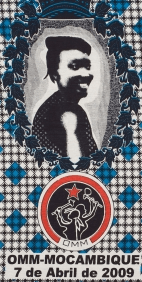
Wikimedia Commons / Public Domain
Josina Machel
Mozambican revolutionary and women's rights activist who organised women within FRELIMO's liberation struggle, creating social programmes for orphans and displaced women during the war for independence.
Biography
Josina Abiatar Muthemba was born on 10 August 1945 in Inhambane, Mozambique, during Portuguese colonial rule. Raised in a politically aware family — her grandfather had been deported for resisting colonial taxation — she grew up witnessing the injustices of the colonial system firsthand.
As a teenager, she was already involved in clandestine resistance activities. In 1964, at just 19, she attempted to cross into Swaziland to join the liberation movement but was arrested by Portuguese secret police (PIDE) and detained. After her release, she successfully made it to Tanzania and joined FRELIMO (Frente de Libertação de Moçambique), the Mozambican liberation movement.
In 1969, she married Samora Machel, who would later become Mozambique's first president.
Historical Context
Mozambique was one of the last African countries under European colonial control. Portugal refused to negotiate independence, leading to a protracted armed liberation struggle that began in 1964. Women were largely excluded from political and military roles in traditional Mozambican society, and the colonial system compounded their marginalisation through forced labour and denial of education.
FRELIMO's leadership initially resisted women's full participation in the struggle, but activists like Josina Machel pushed for women to be included not just as support workers but as leaders and combatants.
What She Fought For
Josina Machel became head of the Department of Social Affairs within FRELIMO, where she organised programmes for war orphans, created literacy initiatives, and established networks to support women displaced by the war. She also led the FRELIMO Women's Detachment, training women as soldiers and political organisers.
She fought for the idea that liberation could not be complete if women remained subjugated — that national freedom and women's freedom were inseparable. She challenged both colonial oppression and patriarchal structures within the liberation movement itself.
Major Achievements
- Head of FRELIMO's Department of Social Affairs
- Led the creation of social programmes for orphans and displaced women during the liberation war
- Organised and led the FRELIMO Women's Detachment
- Pioneered the integration of women into active combat and leadership roles in the Mozambican liberation movement
- Her birthday, 7 April, is celebrated as Mozambican Women's Day
Her Impact Today
Josina Machel died of illness on 7 April 1971, at just 25 years old, before seeing the independence she fought for. But her vision — that national liberation must include women's liberation — became a founding principle of independent Mozambique. April 7th is still celebrated as Mozambican Women's Day in her honour. Her legacy continues to inspire women's movements across Southern Africa.
Sources: Wikipedia (Josina Machel), FRELIMO historical archives, Southern African Liberation Movements
Know an African woman whose story should be here?
Suggest a woman