Wikimedia Commons / Public Domain
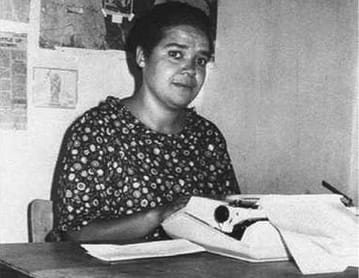
Bessie Head
South African-born writer who spent her adult life as a refugee in Botswana and wrote some of the most powerful African novels of the 20th century. Her books explore race, mental illness, exile, and the search for belonging with a rawness that no one who reads them forgets.
Biography
Bessie Amelia Head was born on 6 July 1937 in Pietermaritzburg, South Africa. The circumstances of her birth were difficult. Her mother was a white South African woman from a wealthy family, and her father was a Black man. Under apartheid law, this made Bessie "coloured," and her mother was institutionalised for the supposed crime of having a relationship with a Black man. Bessie was raised by foster families and later in a mission school.
She worked as a teacher and then as a journalist in Cape Town, where she became involved in the anti-apartheid Pan Africanist Congress. In 1964, fearing arrest, she left South Africa on an exit permit with her young son and settled in Serowe, a village in Botswana. She remained stateless for 15 years, unable to get Botswanan citizenship and unable to return to South Africa. She finally received citizenship in 1979.
During those years of displacement and poverty, she wrote. Her novels When Rain Clouds Gather (1969), Maru (1971), and A Question of Power (1974) established her as one of the most important African writers of her generation. She died of hepatitis in 1986 at age 48.
What She Fought For
Head wrote about what she knew: displacement, racism, the search for dignity, and the fragility of the mind under unbearable pressure. A Question of Power is a deeply personal novel, semi-autobiographical, about a woman's mental breakdown while living as an exile in Botswana. It is widely considered one of the most powerful and challenging novels in African literature.
She fought for the right of displaced, stateless, mixed-race, and mentally ill people to be seen as full human beings with stories worth telling. In a literary world where African writers were expected to write about colonialism in certain acceptable ways, she wrote about the things that were harder to look at.
Major Achievements
- Author of When Rain Clouds Gather (1969), Maru (1971), and A Question of Power (1974)
- Serowe: Village of the Rain Wind (1981) and Tales of Tenderness and Power (1989)
- Widely studied in universities across the world as a foundational African literary text
- Her home in Serowe is now a heritage site and museum
- Considered one of the greatest African writers of the 20th century
Her Impact Today
Bessie Head died young and in poverty, but her books outlasted everything that was done to make her feel like she did not belong anywhere. She is studied in universities across the world. Her work is a reminder that some of the most important literature comes from people who had very little except the truth and the will to write it down.
Sources: Wikipedia (Bessie Head), Heinemann African Writers Series, The Guardian, Khama III Memorial Museum, Serowe
Know an African woman whose story should be here?
Suggest a woman