The Girl They Tried to Keep Hidden: The Story of Destiny Ayo Vaughan
Shipped from Nigeria to Ireland as a child with the promise of a better life, Destiny was held captive for five years. She was not supposed to survive. She was certainly not supposed to speak. She did both.
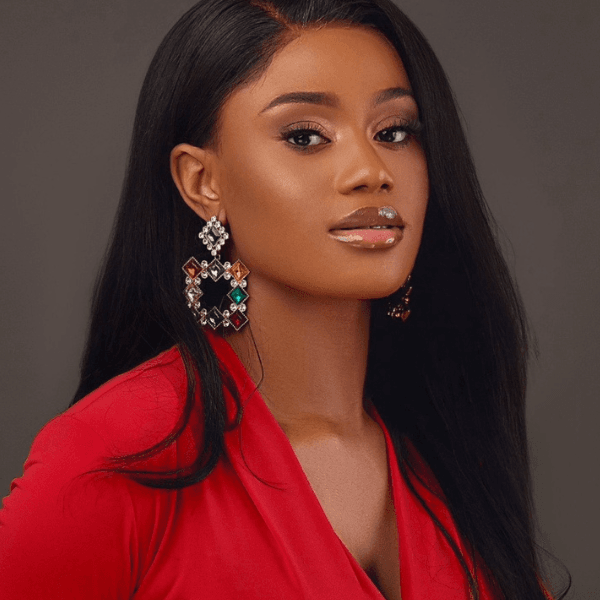
Imagine you are five years old. You live in Nigeria. You do not yet know what the word "arranged" means, but the adults around you have already used it to describe your future. Your marriage has been decided. Your life has been planned. You have not been asked. You are five.
Now imagine something else happens first. Before the marriage can take place, you are told you are going somewhere better. Ireland. A new country. A new life. You and your sisters are going to have opportunities. That is what they say. That is what you believe. Because you are a child, and children believe the adults who are supposed to protect them.
You board a plane. You arrive in a country where everything is unfamiliar. And then the doors close. Not the doors of a school. Not the doors of a warm home with people who love you. The doors of a house you will not be allowed to leave for the next five years.
This is where the story of Destiny Ayo Vaughan begins.
A better life that never came
The promise was simple and convincing. Destiny and her sisters were brought from Nigeria to Ireland under the guise of opportunity. A better education. A safer future. The kind of story that makes families hopeful and children excited.
But there was no school waiting. There was no warm welcome. What waited was confinement. Destiny and her sisters were kept inside a house, hidden from the outside world, cut off from anything resembling a normal childhood. They were not students. They were not daughters being raised with love. They were captives.
If they tried to leave, if they showed any sign of resistance or attempted to escape, pepper was rubbed into their eyes. Let that sit for a moment. These were children. And the punishment for wanting freedom was pain designed to blind.
For five years, that was the reality. No school. No friends. No play. No outside. Just walls, control, and the constant reminder that they were powerless.
The system that caught her, but only just
At some point, Destiny was removed from that house and placed into the Irish foster care system. The details of how she got out are not widely documented, but the transition was not from captivity to comfort. Foster care brought its own challenges. Bullying. Instability. The particular loneliness of being a Black child in a system that was not designed with her in mind.
She had escaped one form of control only to land in another kind of difficulty. Most people, having endured what she had already endured by the time she was a teenager, would have been forgiven for shutting down entirely. For deciding that the world was hostile and acting accordingly.
Destiny did not shut down. She did the opposite.
The education nobody expected her to get
Against every odd stacked against her, Destiny pursued education. Not casually. Relentlessly. She earned a Level Five qualification in Early Childhood Education. Then a Bachelor's Honours degree in Social Science. Then a Master's degree in Psychological Studies from the University of Aberdeen. Both university degrees were earned on scholarship. She was later awarded another scholarship to pursue a master's in Clinical Health Psychology at Queen's University Belfast.
Read that again. A girl who was denied school for the first years of her life in Ireland, who was trafficked, abused, and raised in foster care, went on to earn three qualifications and two scholarships. Not because the system supported her. In spite of the fact that it largely did not.
She did not just survive her childhood. She studied it. She chose to understand trauma not from a distance, but from the inside, combining lived experience with academic rigour in a way that very few people can.
Mind the Gap
In 2019, at the age when many people are still figuring out what they want to do with their lives, Destiny founded Mind the Gap Ireland. It became the country's first anonymous story-sharing platform for survivors of sexual violence.
The idea was born from something she understood personally: that survivors often cannot speak because they do not feel safe. The shame, the fear of not being believed, the weight of what happened — all of it keeps people silent. Destiny built a space where they did not have to show their faces or give their names. They just had to tell their truth.
The platform now supports hundreds of people every year. It uses social media and technology to reach survivors where they are. It funds therapy through donations. It hosts public events and speaking engagements. What started as one woman's response to her own pain became a lifeline for others.
In 2025, Mind the Gap Ireland won the Tech and Innovation Award at the Eir Women of the Year Awards.
The voice that would not stay quiet
Destiny did not stop at building a platform. She became a voice.
She delivered a TEDx talk at TEDxTraleeWomen titled "Understanding the Impact of Trauma on Children," drawing directly from her own experience to explain how childhood trauma reshapes a person's sense of self and what it takes to heal. She was featured in Dr. Sam Collins' book Rebellious, a collection of stories about women who refused to accept the world as it was.
She was named Activist of the Year at the Black and Irish Gala Awards. The Irish Independent named her one of the "50 Ones to Watch" in 2023. She was nominated for the Goss.ie Women of the Year award and as a candidate for the Forbes 30 Under 30 Europe list — a recognition she describes as proof that nothing is off limits. She was selected as a delegate for the United Nations Commission on the Status of Women and invited to the 2024 Forbes Under 30 Summit Africa in Botswana. She joined the 2023 Social Entrepreneurs Ireland Ideas Academy and the SheGenerates programme for women founders. In 2022, she was selected as a Local Pathways Fellow under the UN Sustainable Development Solution Network.
She speaks internationally now — on mental health, sexual violence, diversity, resilience, and entrepreneurship. She speaks with the London Speaker Bureau. She speaks at universities, conferences, and events across multiple countries.
The girl who was kept hidden in a house for five years now stands on stages in front of hundreds and tells her story out loud.
Why this story matters
Destiny's story is not just remarkable because of what she endured. It matters because of what it reveals.
Child trafficking is not a distant issue. It happens within families, across borders, and inside countries that consider themselves modern and safe. Destiny was not trafficked by strangers. She was brought to Ireland by people she was supposed to trust. That is how trafficking often works, through false promises made by familiar faces.
The foster care system is not always a rescue. Being removed from one harmful environment does not guarantee safety. For many children, particularly Black children in predominantly white countries, the system introduces new forms of isolation and harm. Destiny's story forces us to ask what happens after a child is "saved."
Education is resistance. When a girl who was denied schooling goes on to earn multiple degrees on scholarship, that is not just personal achievement. It is a political act. Every qualification Destiny earned was a direct contradiction of everything her traffickers believed about her worth.
Silence protects abusers, not survivors. Destiny built Mind the Gap Ireland because she understood that the silence surrounding sexual violence is not neutral. It serves the people who cause harm. Breaking that silence, even anonymously, shifts the balance of power.
Survival is not the end of the story. Too often, we tell stories of abuse that end with "she survived." As if survival itself is the conclusion. Destiny's story shows that survival is the beginning. What comes after, what you build, what you refuse to accept, what you create for others, is the story that matters most.
What to take away
- Destiny Ayo Vaughan was trafficked from Nigeria to Ireland as a young child under the promise of a better life, then held captive in a house for five years where she and her sisters were subjected to physical abuse.
- After being placed in the foster care system, she overcame bullying and instability to pursue education, earning multiple degrees on scholarship including a master's from the University of Aberdeen.
- In 2019, she founded Mind the Gap Ireland, the country's first anonymous platform for survivors of sexual violence, which now supports hundreds of people every year.
- Her activism has earned her recognition as Activist of the Year, a United Nations delegate, and one of Ireland's most watched social entrepreneurs.
- Her story exposes the realities of child trafficking, the limitations of care systems, and the transformative power of education and refusal to be silenced.
They tried to keep her hidden. They tried to keep her quiet. They tried to make her disappear inside four walls and a closed door. She walked out, earned her degrees, built a platform, stood on stages, and told the world exactly what happened. Some people survive. Destiny Ayo Vaughan did something harder. She made sure no one could look away.